

Subtotal $0.00
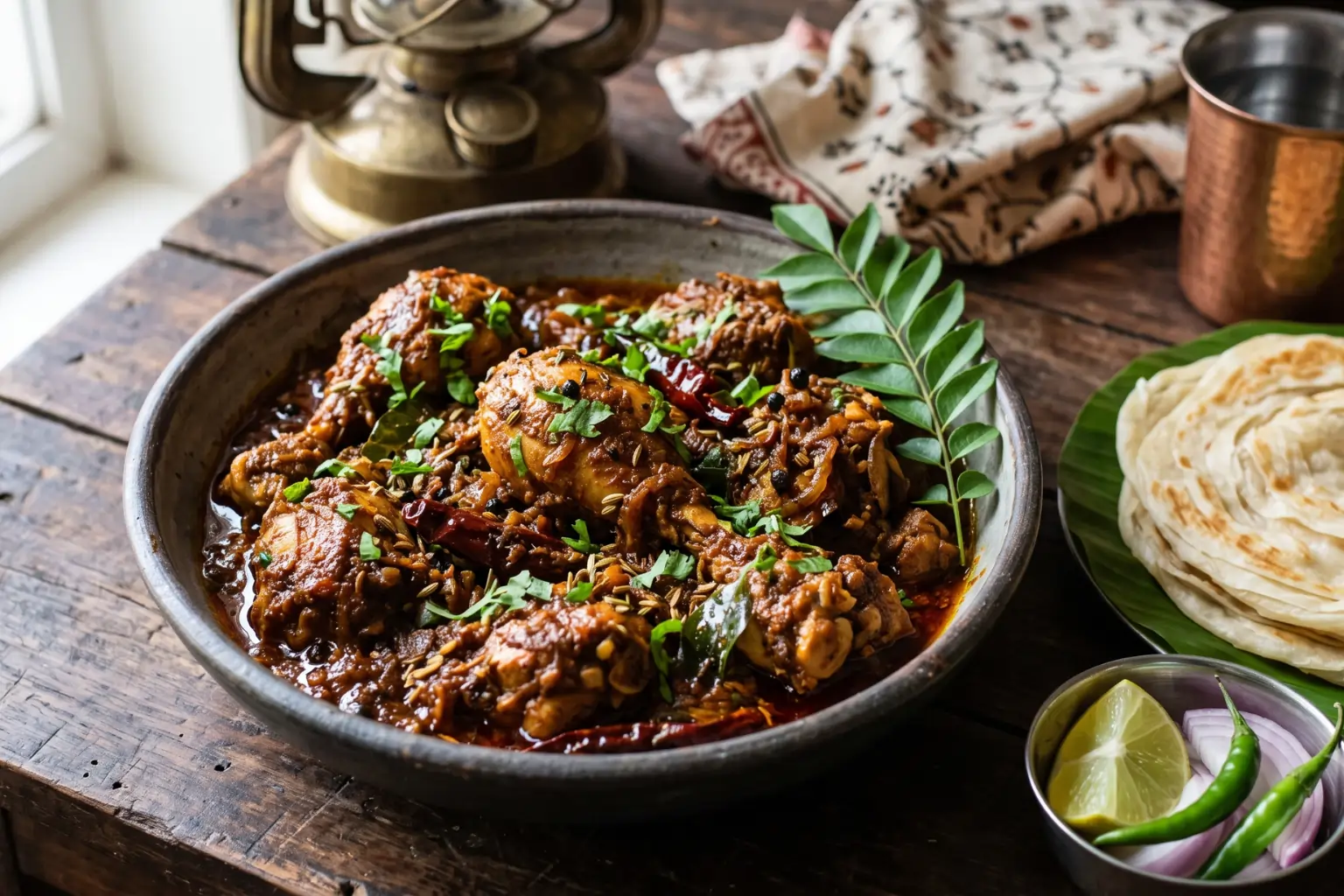
Level 1, 192 Queen Street in Campbelltown, holds a menu built around regional Indian cooking, and spicy Chettinad chicken is one of the dishes regulars order by name. It comes from the Chettinad region of Tamil Nadu, an area known across South Indian cuisine for grinding whole spices fresh rather than leaning on a pre-mixed masala tin.
Table of Contents
| No | Section Name |
|---|---|
| 1 | What Does Make Spicy Chettinad Chicken Different? |
| 2 | The Spice Blend Behind Every Bite |
| 3 | Where This Curry Fits on an Indian Menu |
| 4 | Final Thoughts |
| 5 | FAQ |
What Does Make Spicy Chettinad Chicken Different?
Most curry houses simplify South Indian dishes for a broader palate. This one does not. The Curry House builds its version around a roasted spice blend, ground the traditional Chettinad way, using black pepper, fennel, and dried red chillies rather than a shortcut paste. Coconut goes in for body, curry leaves for aroma, and ginger, garlic, and shallots for the base that carries the heat. The chicken is simmered slowly, not flash-cooked, which is why the sauce clings rather than sits thin on the plate.
That slow simmer matters more than it sounds. The roasting of whole spices before grinding changes their flavour compared to using ground spice straight from a jar. The Curry House applies that same logic here, and it shows in the final dish. The result sits at $24.90 on the menu, listed under Mains, and it comes across less like a mild introduction to Indian food and more like a dish meant for someone who already knows what they want from a curry.
The Spice Blend Behind Every Bite
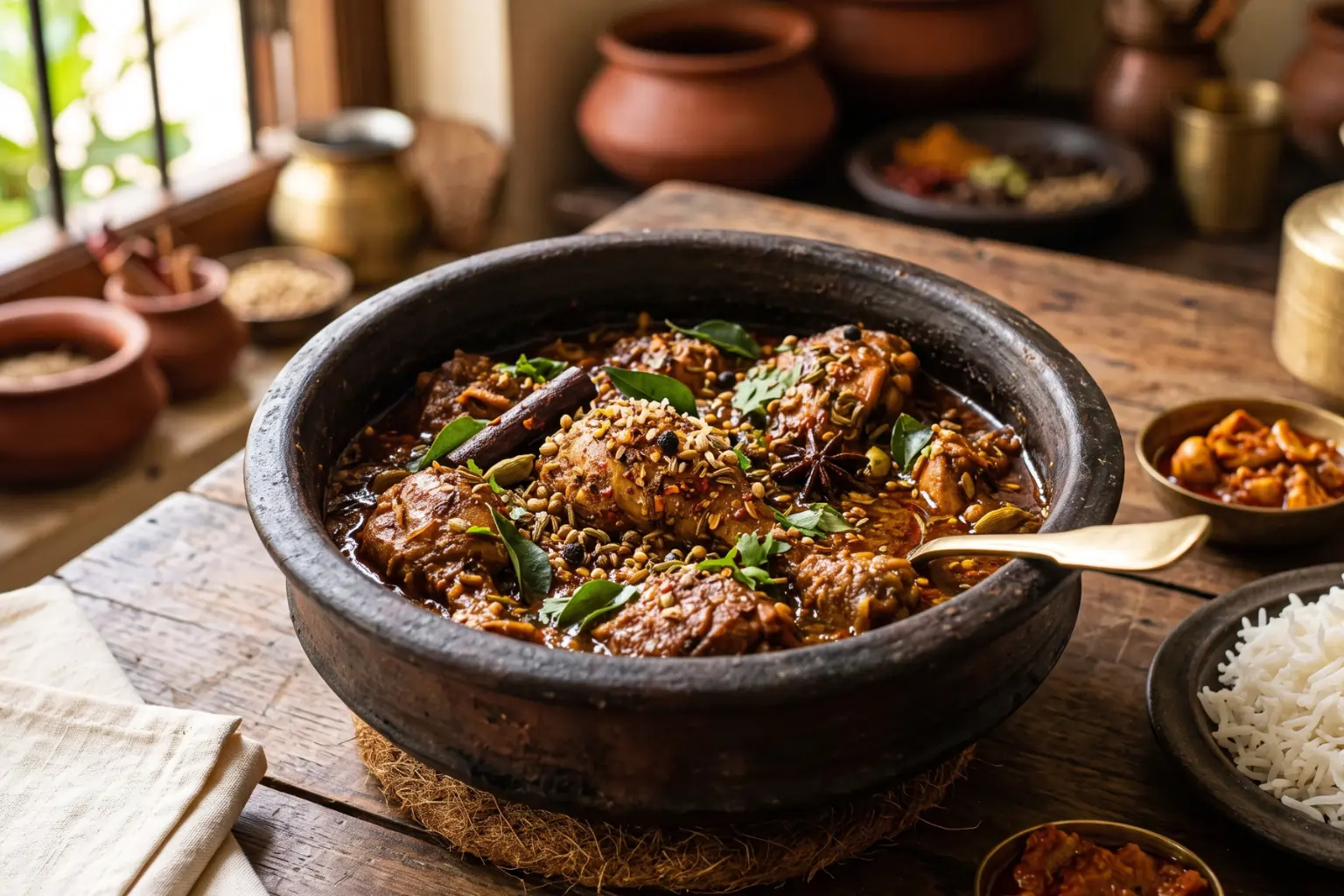
Fennel brings a faint sweetness that balances the black pepper’s sharper bite. Dried red chillies do most of the heat work, but they are tempered by the coconut, which keeps the gravy from tasting one-note. Curry leaves are added at a stage where they release oil rather than just scent, a detail that separates a properly made Chettinad gravy from a rushed one.
This is where the dish earns comparison to other Kerala cuisine staples on the same menu, like pepper chicken or karahi chicken. Chettinad chicken sits closer to the fiery end, but it is not a one-dimensional heat. Ginger and garlic soften the front of the dish before the chilli and pepper take over, and shallots add a sweetness that keeps it from tipping into pure fire. Anyone who has tried a black pepper chicken curry elsewhere and found it flat on flavour will likely notice the difference here, since the spice ratio leans on balance rather than volume alone.
Where This Curry Fits on an Indian Menu
Indian restaurant menus in Australia often blend regions that rarely appear side by side back home. Kerala’s coconut-based curries and North India’s tandoori dishes come from different culinary traditions entirely, shaped by different climates, spice availability, and cooking methods. Chettinad chicken belongs to neither category. It draws from Tamil Nadu, a state bordering Kerala, and its cooking method (dry-roasting whole spices before grinding them) has little in common with a tandoor oven or a cream-finished gravy.
That distinction matters when comparing it to something like mango chicken or butter chicken, both of which rely on dairy and a gentler spice ratio to round out the flavour. Chettinad chicken skips dairy altogether. The heat comes from dried red chillies and black pepper, cut only by coconut and shallots rather than cream, which explains why the two styles taste nothing alike despite sitting on the same page of a menu like the one at The Curry House.
For someone new to South Indian food, this difference is worth knowing before ordering. A menu that includes both North and South Indian dishes, as The Curry House’s does, gives a fairly direct way to taste that contrast in one sitting: order a cream-based curry and a Chettinad-style dish together, and the gap in spice technique becomes clear almost immediately.
Final Thoughts
Spicy Chettinad chicken is not built to be everyone’s first Indian dish, and that is exactly its appeal for people who already know their spice tolerance and want a curry with real depth behind the heat. The Curry House in Campbelltown keeps the preparation close to how it is made in Tamil Nadu, rather than adjusting it down for a broader audience.
FAQ
It runs hotter than most curries on a typical Indian menu, mainly from dried red chillies and black pepper. Coconut and shallots soften the edge slightly, but if you usually order mild, expect this one to push past that comfort zone by a fair margin.
Roasted spices form the base, ground fresh rather than pre-mixed. Coconut, black pepper, fennel, dried red chillies, curry leaves, ginger, garlic, and shallots go into the pan before the chicken simmers slowly in that mixture.
Butter chicken and korma lean on cream and a milder spice profile. Chettinad chicken skips the cream entirely and relies on roasted spice and coconut instead, which gives it a drier, sharper, more South Indian character.
Not quite. The style traces back to the Chettinad region of Tamil Nadu, a neighbouring state known for its heavy use of whole roasted spices. The Curry House serves it alongside Kerala dishes, but the two traditions are distinct.
Butter chicken or mango chicken both sit near the mild end of the same menu. Ordering one of those next to Chettinad chicken makes the spice difference obvious within a couple of bites.

