

Subtotal $0.00
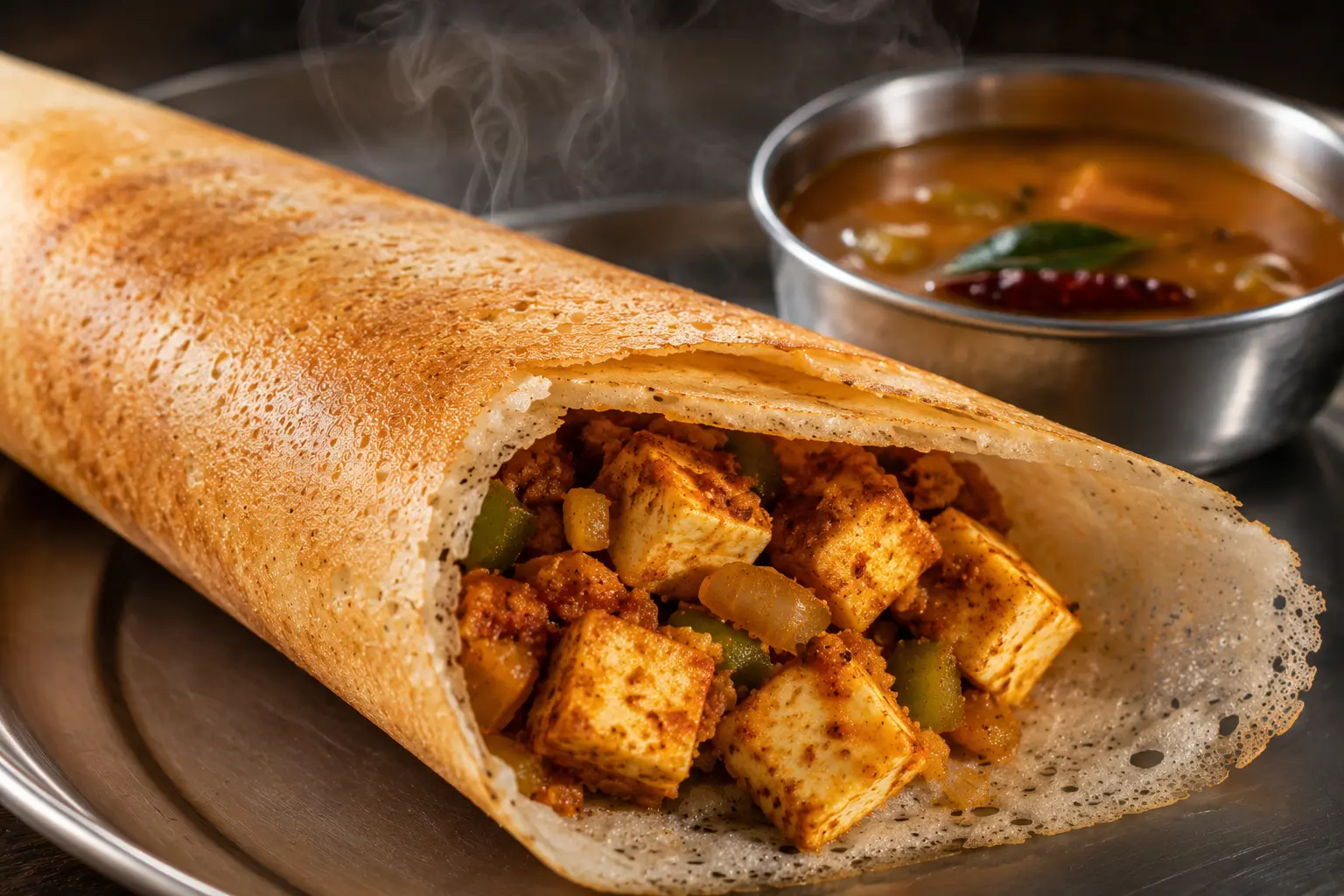
A hot tava, a ladle of fermented batter, and a few practiced strokes are all it takes to turn rice and lentils into a paper-thin crepe. South Indian dosas hold a steady place on Indian menus across Australia, and at The Curry House in Campbelltown, four distinct versions sit together under one menu category: lamb, paneer, masala, and ghee roast. Each starts from the same fermented base, then splits off into its own texture and filling, which makes the category a useful entry point for anyone new to South Indian cooking.
Table of Contents
How Are South Indian Dosas Made Using Traditional Fermented Batter?
A dosa starts as rice and split urad dal, soaked separately, ground into a batter, and then left to ferment overnight.That fermentation does two things. . It provides the batter a mild tang, and it changes the texture, turning a thick paste into something that spreads thin across a hot griddle without tearing. The dish traces back to South India, with Tamil Nadu, Karnataka, and Kerala each shaping their own regional style over generations. Some versions come out soft and pale, closer to a pancake. Others are pressed thin until the edges turn lacy and brown, closer to a wafer. The variation depends on batter consistency, griddle heat, and how much oil or ghee touches the pan during cooking. Home cooks in South India often judge a batter by smell and bubble pattern before it ever reaches the tava, a skill that takes years to read correctly.Dosas rarely arrive alone. Coconut chutney, tomato-based chutney, and a thin lentil stew called sambar usually sit alongside, and the balance between the crisp shell and the wetter sides is part of what makes the dish work as a full plate rather than a snack.
Masala Dosa and Ghee Roast Dosa, Two Ways to Treat a Classic
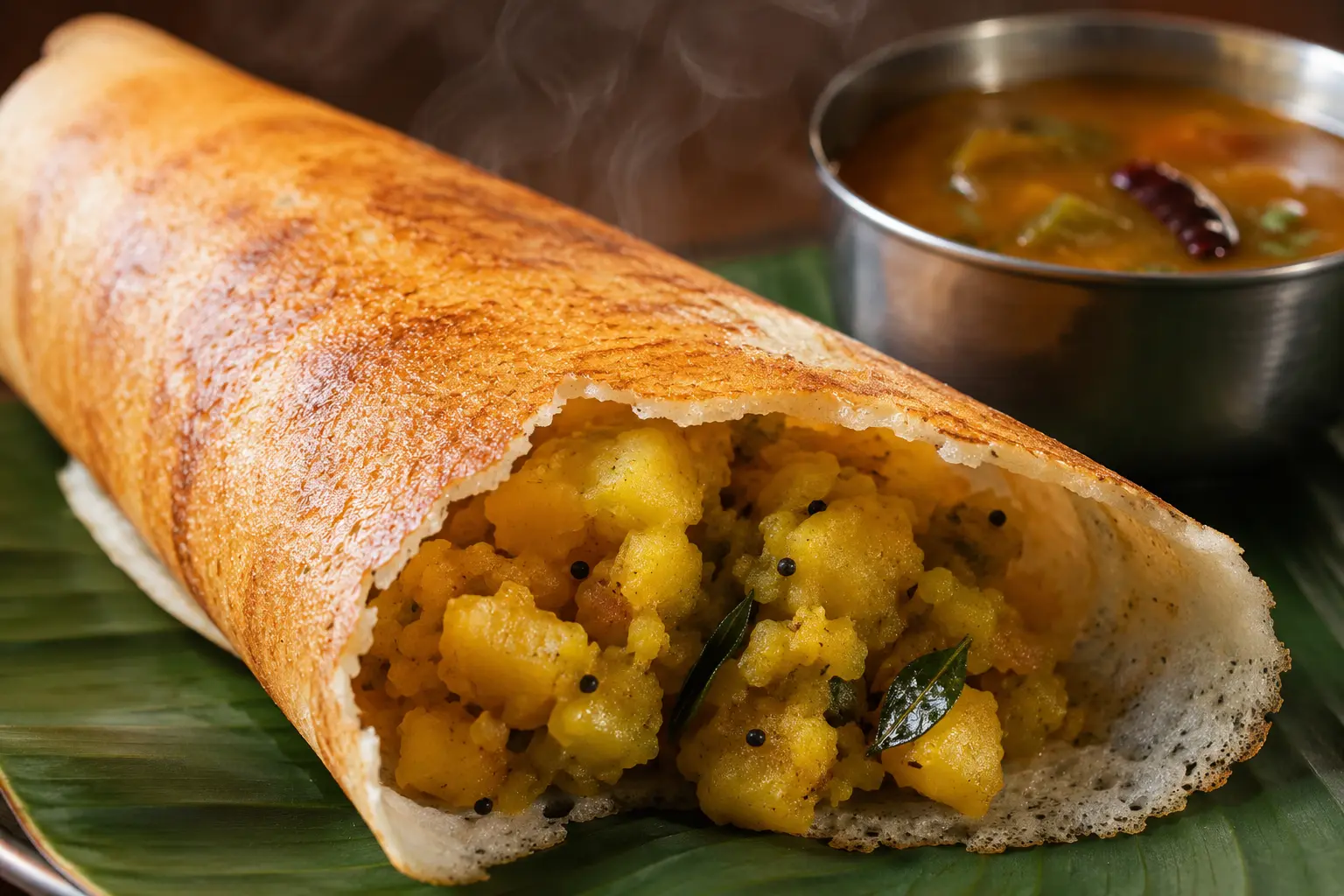
Masala dosa is probably the version most people picture first. A spiced potato filling sits folded inside a crisp shell, and the dish reads as a full meal rather than a side, especially once chutney and sambar join the plate. Ghee roast dosa takes a different route. Instead of a filling, the focus shifts to the cooking method itself, with ghee brushed across the batter as it cooks so the surface turns golden and noticeably crisp at the edges while the center stays soft. Both sit at The Curry House, alongside two less traditional entries that push the format further.
Paneer Dosa and Lamb Dosa Widen the Category
Paneer dosa swaps the usual potato for cubes of fresh cottage cheese, giving vegetarian diners a heartier, protein-forward option without stepping outside the dosa format. The cheese holds its shape under heat, so the filling stays distinct rather than blending into the batter. Lamb dosa goes further still. Meat fillings are not part of the traditional dosa repertoire in most of South India, so this version reflects how the dish adapts once it travels beyond its home region and meets a broader, mixed audience. Both dishes keep the same base, the same fermented batter, and the same cooking method, and only the filling marks the difference between them.
Of the four, Masala and Ghee Roast stay vegetarian, since potato and ghee involve no meat, while Paneer keeps the same vegetarian profile through cottage cheese. Lamb dosa is the outlier on the list, and it tends to draw a different crowd than the other three, since it reads more like a fusion plate than a classic South Indian breakfast dish. Knowing that split in advance helps when the table includes a mix of vegetarian and non-vegetarian diners.
Finding These Varieties in Campbelltown
The Curry House sits at Level 1, 192 Queen Street in Campbelltown, New South Wales, serving Kerala coastal dishes alongside North Indian tandoori cooking. The South Indian Gravings category runs as its own section on the menu, separate from the biryanis, breads, and mains that make up the rest of the offering. Diners looking for a wider comparison can browse the menu, where the four dosa varieties sit next to rice dishes, curries, and street food-style entrees drawn from across the country. The restaurant operates Tuesday through Sunday, with a midday sitting and an evening sitting on each of those days, and stays closed on Monday. That split schedule is worth checking before planning a visit, since it differs from restaurants that run a single continuous service.
Final Thoughts
Four dosa varieties on one menu say something about how far the dish has traveled from its fermented, rice-based origins. Masala and ghee roast lean into tradition, staying close to what a South Indian kitchen might have served a generation ago. Paneer and lamb show that the format can stretch once it meets new ingredients and new diners. Anyone weighing out south indian dosas for a first order might start with ghee roast for the texture, then work toward the filled versions once the base flavor feels familiar. Which one would you try first?
FAQ
Masala dosa comes filled with spiced potato folded inside the crepe, so it eats like a full meal. Ghee roast skips the filling entirely and puts the focus on the cooking technique, with ghee brushed across the batter so the outside turns crisp and golden while the inside stays soft.
Yes. Paneer is fresh cottage cheese, so paneer dosa keeps the same vegetarian profile as masala and ghee roast. It just swaps the potato filling for cubes of cheese, giving the dish a bit more protein without stepping outside vegetarian territory.
Meat fillings sit outside the classic South Indian dosa tradition, but they show up once a dish travels beyond its home region and adapts to a wider audience. Lamb dosa keeps the same fermented base and cooking method, with the filling as the only real departure.
The restaurant runs Tuesday through Sunday, with separate midday and evening sittings each day, and stays closed on Monday. Worth checking the sitting times before you head over, since the schedule isn't a single continuous service.
Fermentation isn't optional if you want an authentic texture. It softens the rice and lentil mixture, adds a mild tang, and lets the batter spread thin without tearing on the tava. Skipping that step changes both the flavor and how the crepe holds together.

