

Subtotal $0.00
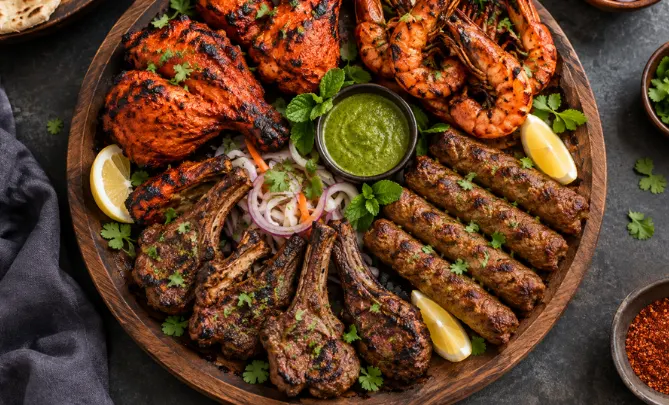
Tandoori delights get their name from the tandoor, a cylindrical clay oven that Indian kitchens have used for centuries to cook meat over live charcoal rather than an open flame or standard grill. The result is a dish with a charred exterior and a moist interior, a contrast that’s hard to reproduce with other cooking methods.
Table of Contents
| No | Section Name |
|---|---|
| 1 | How Do Tandoori Delights Are Cooked? |
| 2 | What Shows Up on a Tandoori Delight Menu |
| 3 | Tandoori Cooking Alongside Regional Indian Cuisine |
| 4 | Ordering Tandoori Dishes in Practice |
| 5 | Final Thoughts |
| 6 | FAQ |
How Do Tandoori Delights Are Cooked?
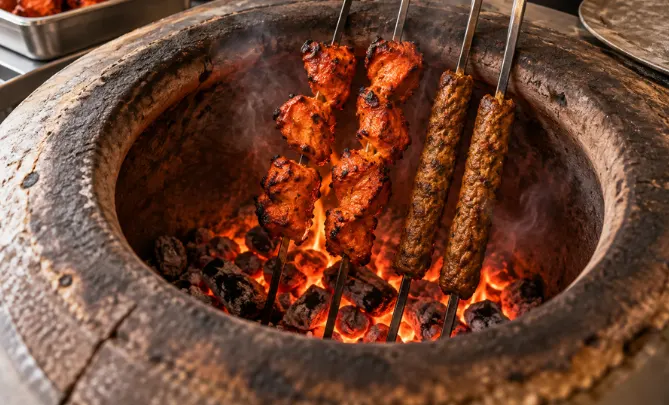
A tandoor works through radiant heat. Its clay walls hold a steady, intense temperature, so food cooks fast on the surface while staying tender underneath. Britannica notes that tandoori cookery is believed to have originated in Persia before becoming closely associated with North Indian cuisine, and the basic method hasn’t changed much since: charcoal fire, sealed clay chamber, meat lowered in on skewers or hooks. Most tandoori delight recipes start with a yoghurt-based marinade mixed with ground spices like cumin, coriander, chilli and garam masala. The yoghurt tenderises the meat and helps the marinade cling during cooking, which is part of why the surface browns and blisters rather than drying out under such high heat.
What Shows Up on a Tandoori Delight Menu
A typical tandoori delight menu is built around a handful of proteins prepared the same basic way, with variations mostly coming down to cut size and spice intensity. Whole or half chicken, marinated and roasted bone-in, is the most common entry point. Smaller cuts like chicken tikka use boneless pieces that pick up proportionally more char, while a cream-based option such as malai tikka trades chilli heat for a milder, richer flavour. Prawns and lamb also appear regularly. Prawns need only a short stint in the tandoor given how quickly they cook through, while lamb cutlets take longer and tend to be served as a shared plate rather than an individual portion. Minced meat formed onto skewers, known as seekh kebab, is a further variation, and some kitchens extend the tandoor treatment to dumplings, giving them a drier, blistered skin instead of the usual steamed texture. A tandoori delight restaurant will usually group all of these under one menu section rather than scattering them across the card, since they share the same cooking method and prep station.
At The Curry House in Campbelltown, this range of dishes sits under the restaurant’s non-veg entrees category, alongside items like tandoori chicken, tandoori prawns, tandoori lamb cutlets and seekh kebab.
Tandoori Cooking Alongside Regional Indian Cuisine
Tandoori dishes are usually associated with North Indian cooking, where the dry, smoky style of the tandoor developed. That’s a different approach from South Indian traditions such as Kerala cuisine, which lean more on coconut, curry leaves and slow-simmered gravies than on high, direct heat. Menus that carry both styles, tandoori items alongside coconut-based curries, are effectively presenting two separate cooking traditions rather than one cuisine with small variations. Diners who want to sample both often start with a tandoori item, since its dry texture works well before a saucier curry course rather than after one.
Ordering Tandoori Dishes in Practice
Tandoori food is typically ordered as a starter or a shared plate rather than a full meal on its own, since the cooking method favours smaller cuts and shorter cooking times over large, sauce-heavy portions. Spice level is worth checking before ordering, since it varies by dish rather than by the cooking method itself. Anyone planning to visit The Curry House in Campbelltown can check current hours and table availability directly with the restaurant, as dine-in and takeaway are both offered.
Final Thoughts
Tandoori delights are as much about a cooking method as they are about any single dish. The clay oven, the yoghurt marinade and the short, high-heat cooking time are what define the category, and everything from chicken to prawns to lamb gets shaped by that same basic process. Understanding the method makes it easier to know what to expect on the plate, whichever protein ends up on the order.
FAQ
Tandoori chicken usually means a half-or-whole bird cooked bone-in, marinated in yoghurt and spices before it goes into the clay oven. Chicken tikka uses smaller boneless pieces instead, so the marinade reaches more surface area and the pieces pick up a bit more char.
Reservations help on weekends, since the restaurant runs longer hours on Saturday and Sunday and tables can fill during dinner service. Weekday lunch tends to be quieter, so walking in between 11am and 3pm usually works without a booking.
Spice level varies by dish rather than by the cooking method itself. Afghani Malai Tikka leans cream-based and mild, while something like the lamb cutlets carries more heat from the marinade's spice blend. Ask staff before ordering if spice tolerance is a concern.
Yes, both dine-in and takeaway are available across the tandoori delight menu. Ordering for pickup works the same way as ordering in the restaurant, and the food gets prepared fresh either way rather than held ahead of time.
A coconut-based curry from the Kerala side of the menu balances the dryness of tandoori dishes fairly well. Rice or a flatbread rounds out the plate, and starting with a smaller tandoori portion before a shared curry main is a common approach among regulars.

