

Subtotal $0.00
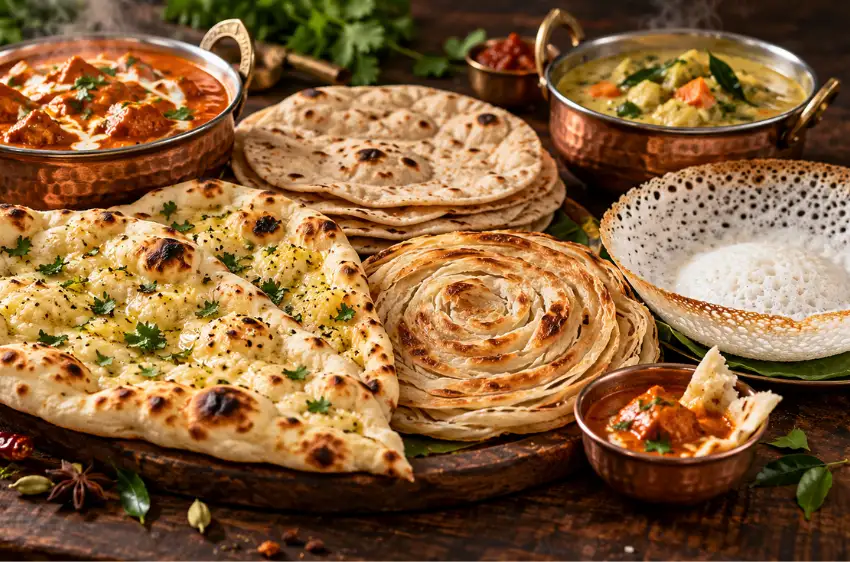
Count the breads on the menu at an Indian restaurant in Campbelltown, NSW, and you may pass a dozen before you reach the rice. That spread is why first-timers freeze at the ordering stage. This guide walks through the types of Indian bread you will meet most often, what each one is like, and which curry it handles well.
Table of Contents
Indian Bread Varieties Start With the Cooking Method
Most Indian bread varieties fall into two camps. Tandoor breads bake in a clay oven, which gives naan its smoky edge and blistered surface. Everything else cooks on a griddle or in a pan and tends to run flakier or more tender.
Geography adds a second layer. North India’s tandoori cooking and Kerala’s coconut-rich curries often share one bread list, so Indian bread types split by region as much as by method. Knowing both helps you predict how a bread behaves at the table. Tandoor breads hold up to scooping. Griddle breads fold, tear and mop.
Seven Types of Indian Bread Worth Knowing
Plain Naan
Soft, tandoor-baked and mild, plain naan is the default scoop for North Indian gravies. Butter chicken, a North Indian staple, is the usual partner because the bread soaks up the sauce without competing with it.
Garlic and Cheese Naan
Garlic naan arrives brushed with butter and infused with garlic and herbs, so it brings its own flavour. It works with creamy gravies, such as a mango and coconut sauce, where the garlic cuts the sweetness. Cheese naan, with melted cheese baked in, makes a heavier bite. A chocolate and cheese version exists too, but it reads more like dessert.
Peshwari Naan
This is the sweet-leaning member of the naan family. Fillings in this style can include nuts, so check the ingredients first if you avoid them. Besides a savoury, well-spiced main, the sweetness gives the plate some contrast.
Roti
Roti sits at the plain end of the list. It is an everyday flatbread with no toppings. That restraint suits thick, strongly seasoned dishes like pepper chicken masala, built on black pepper and curry leaves, where the bread should stay out of the way.
Aaloo and Paneer Kulcha
Kulcha comes stuffed, with potato in one version and paneer in the other. Since the filling already seasons the bread, a simple vegetable curry is plenty.
Kerala Parotta
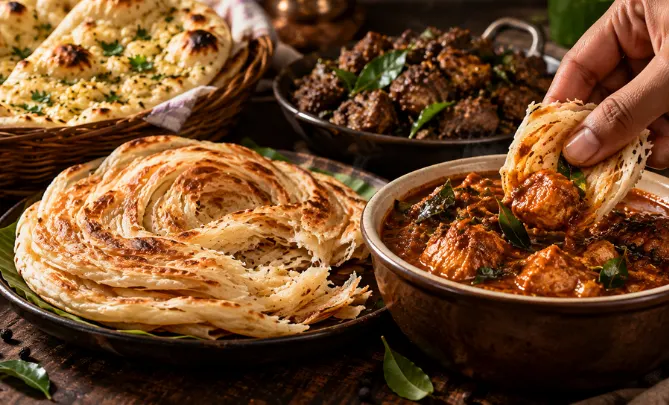
Parotta belongs to Kerala’s tradition rather than the tandoor’s. It is layered and made for tearing by hand. Kerala parotta with chicken curry is a well-known Kerala pairing, and bolder South Indian dishes such as Chettinad chicken follow the same idea.
Appam
Another Kerala bread, appam, suits the region’s coconut-rich curries. It is gentler than naan and softer than parotta, which makes it a fit for milder dishes where you want the curry to lead.
Matching Indian Bread for Curries
Choosing Indian bread for curries comes down to one idea: match the weight of the bread to the weight of the sauce. Thick, clingy gravies call for a scooping bread like naan or roti. Thinner or coconut-based curries suit appam and parotta, which take on liquid well. Dry, spiced dishes pair with plain bread. Lamb, beef, seafood and vegetable mains all follow the same logic. Whichever types of Indian bread you pick, the sauce should lead.
Allergen and Dietary Notes Before You Order
Bread is where hidden allergens often sit. Many Indian breads are wheat-based, so they are not suitable for anyone with coeliac disease or a wheat allergy. Cheese-filled versions add milk, and sweet naan can add nuts. Under the Food Standards Code, food businesses serving unpackaged meals must provide allergen information on displayed labelling or on request, so ask the kitchen directly.
On the nutrition side, the Australian Dietary Guidelines list grain foods, mostly wholegrain or high-fibre types, as one of five food groups. Treat a restaurant bread as one part of a meal, alongside vegetable and legume dishes. For personal dietary needs, a doctor or accredited practising dietitian is the right person to ask.
Final Thoughts
Indian bread gets easier to order once you know the logic: cooking method first, then the weight of the sauce. If the list feels crowded, start with plain naan or roti, then branch out into kulcha, parotta or appam. Which curry will you order first, and which bread will you match to it? The Curry House in Campbelltown, NSW, lists all seven breads on its menu.
FAQ
Naan is a soft, tandoor-baked bread that comes plain or flavoured with garlic, cheese or fillings. Roti is the simpler everyday flatbread with no toppings. Go for naan with creamy North Indian gravies and roti when the dish is already heavily spiced.
Plain naan suits creamy chicken gravies like butter chicken, while roti handles peppery dishes such as pepper chicken masala. In Kerala, parotta is the usual partner for chicken curry. Honestly, it depends on how thick and spicy the sauce is.
Not usually. Many Indian breads are wheat-based, so they are unsuitable for coeliac disease or wheat allergy, and fillings can add milk or nuts. Ask the restaurant for allergen details before ordering.
Parotta is a layered flatbread from Kerala, often eaten with chicken curry or other bold South Indian gravies. It differs from tandoor naan because it cooks on a griddle instead of in a clay oven. Tear it by hand and use the pieces to mop up sauce.
