

Subtotal $0.00
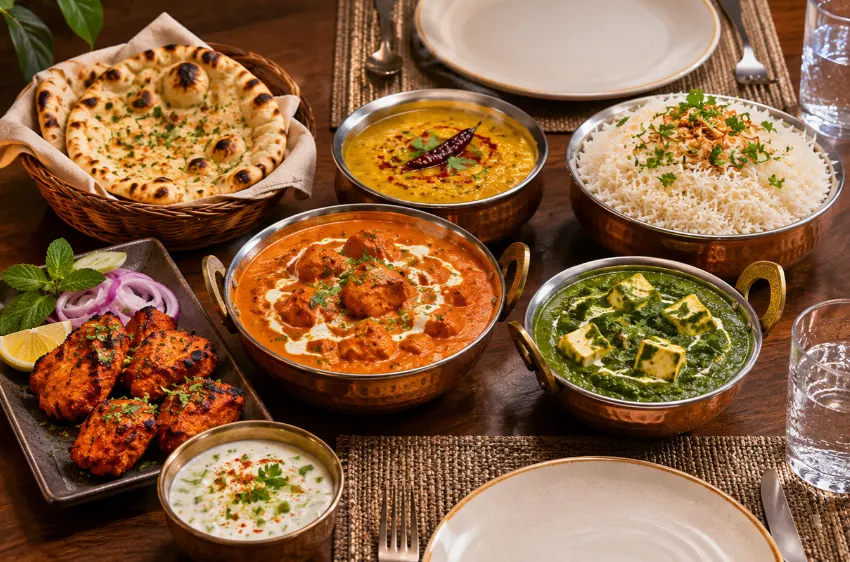
A full Indian menu can run to eighteen sections, from veg mains and tandoori entrees to Indo-Chinese dishes from the wok. Two people at one table will only get through a fraction of it. Ordering Indian dinner meals for a pair goes wrong in a predictable way: three rich curries, nothing sharp to cut through them, and a stack of containers the next morning. Here is a simple build, a way to balance the table, and the safety points worth settling before the order goes in.
Table of Contents
Planning Indian Dinner Meals for Two Without Overordering
Start with a skeleton and adjust from there. For two adults, a workable build is one shared entree, two mains, one rice, one or two breads and a cooling side. That makes five or six items.
If you typed ‘dinner places near me’ into your phone and landed on a menu this long, the same build holds at almost any dinner restaurant. Tandoori entrees are the easy part because the menu lists piece counts: four pieces of chicken tikka or seekh kebab, six prawns, and three lamb cutlets. Curries are harder. Serves are not listed by weight, so treat the build as a starting point and ask the team how generous the portions run.
Two mains is the sweet spot because it forces contrast. One feels thin, and three crowds the rice. If you are still hungry, add bread before a third curry.
Pick Dishes by Job, Not by Name
Every dish plays a role. Rich ones carry cream, butter or coconut. Sharp ones bring pepper or chilli. Cooling items, such as cucumber raita or a tomato, onion and cucumber salad, reset your mouth between bites. A table of only the first role feels heavy by the third forkful, and a table of only the second wears you out.
Check the gravy colour too. A creamy tomato dish like butter chicken sits well besides something green, like chicken spinach or palak paneer. Chettinad chicken runs hot and peppery, so a bowl of dal tadka alongside softens the edge. Two orange gravies blur together.
Texture matters as much as flavour. Soft curries want something with bite, which is where a tandoori entree earns its place. When you scan dinner places near me on a weeknight, those same roles let you read any menu quickly.
Balancing Protein, Vegetables and Heat
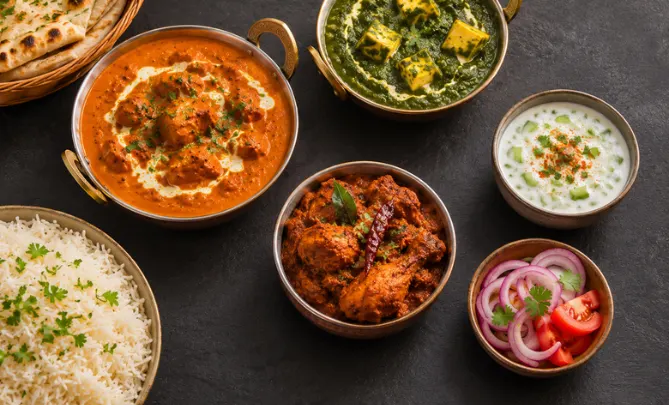
Most Indian dinner meals tilt towards meat and starch, so give vegetables a real seat. One meat main and one vegetable or legume main is an easy split. Chana masala, dal makhani, mixed veg korma and aloo gobi all sit in the veg main list. The Australian Guide to Healthy Eating recommends a variety of foods from five food groups every day, and a split table gets you closer without counting anything.
Heat deserves the same planning. Order one hot dish, not two. Pepper chicken and Chettinad chicken sit at the fiery end, while mango chicken leans sweeter and tangier. If one of you prefers mild, anchor that side with something creamy and keep raita and mango chutney within reach.
Dietary Needs and Allergens Before You Order
Allergies change the whole order, so settle them first. Menu names rarely list every ingredient, and gravies, breads and marinades can carry dairy, gluten, nuts or shellfish. Tell the server about any allergy before ordering and ask how the dish is prepared, stored and served. Allergy specialists give the same advice for eating out, and they add that if you are unsure a dish is suitable, you should not eat it.
Vegetarian diners can build a full meal from the veg main and veg entree sections, though shared cooking surfaces are worth asking about. Anyone managing a medical condition through diet should check with a doctor or dietitian instead of leaning on a blog.
Taking Leftovers Home Safely
Cover leftovers and get them into the fridge within two hours, keep the fridge below 5°C, and eat them within three days, or two days for cooked rice. Reheat until steaming hot, at least 60°C, and stir microwaved food so it heats evenly. That is the NSW Food Authority’s guidance.
Final Thoughts
A good order for two is less about quantity and more about contrast: one rich dish, one sharp one, something cooling and a starch to tie it together. Start with the five-part build, adjust for appetite and allergies, and ask questions at the table. The Curry House in Campbelltown serves dinner from 5 pm to 10 pm every day, which helps if you are planning around a late evening. Which role is usually missing from your order?
FAQ
Five or six items usually do it: a shared entree, two mains, rice, a bread or two and a cooling side. If you are still hungry, add bread before adding another curry.
Look for separate veg mains, tandoori entrees and breads, since that makes balancing easy. Then check the dinner hours and ask the staff how big the serves are.
Yes. Split the mains, with one meat curry and one dal, chana or paneer dish, then share rice and bread. Ask about shared cooking surfaces if it matters to you.
Usually. One hot dish plus something creamy or lentil-based keeps both spice levels happy, and a side of raita cools things down.

