

Subtotal $0.00
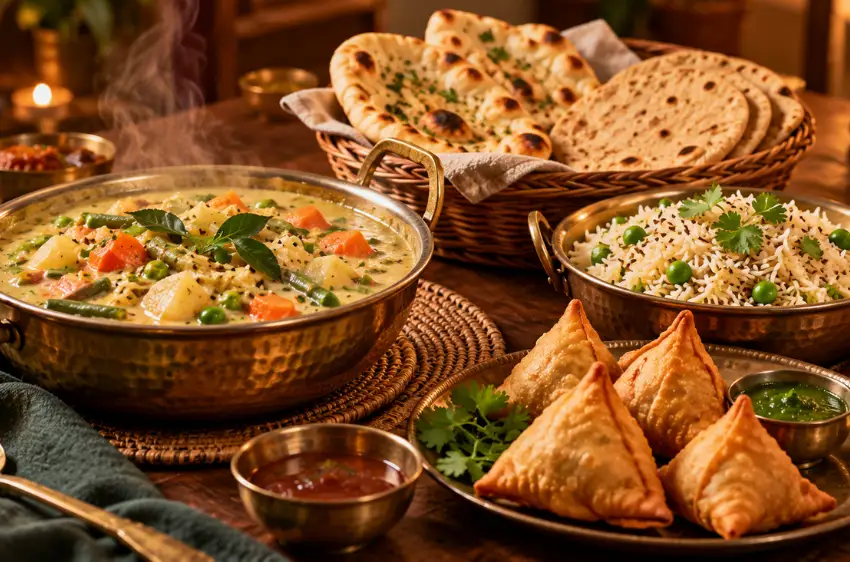
Campbelltown in January and Campbelltown in July ask for very different dinners. Vegetarian Indian side dishes follow that swing more closely than most people expect, because a side has a different job on a hot evening than on a cold one. This guide sorts them by season, drawing on the dishes and menu categories of a Kerala and North Indian kitchen in the area.
Table of Contents
How Do Vegetarian Indian Side Dishes Fit the Australian Seasons?
Start with the calendar. In New South Wales, summer runs from December to February and winter from June to August, the reverse of the northern hemisphere dates most recipe sites assume. That flip matters when you plan a table.
An Indian meal is built from parts. A main curry sits in the middle, and the sides around it include rice, breads, small plates, and accompaniments. In the kitchen this guide draws on, the Veg Main group holds about a dozen items, Veg Entrees add a smaller set of starters, and street food, rice, breads, and accompaniments each get a category of their own.
Kerala cooking leans on coconut, while North India is known for smoky tandoori work. Seasonal thinking helps you decide which of those flavors you want beside you.
Light Summer Sides for Hot Evenings
Heat changes appetite. Heavy gravies lose their pull, and people reach for smaller, quicker bites.
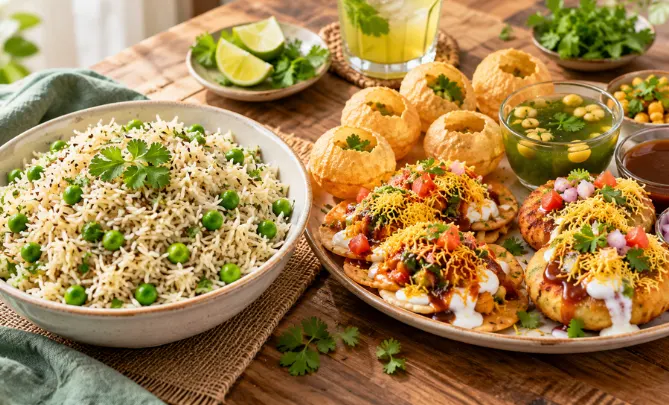
Jeera and peas pulao are the easy anchors. Jeera is cumin, and the dish pairs it with green peas and rice. It is described as fragrant and light, with a comforting quality, which is about the right brief for a side on a warm night. It asks nothing of whatever sits next to it.
Then there is chaat, the street food side of Indian cooking. One platter can carry pani puri, papdi chaat, and aloo tikki chaat together, so a table shares several textures from a single plate. Street food suits summer because it arrives in small bites rather than as a heavy plate.
A few habits help. Keep the rice simple. Pick one chaat to start instead of ordering everything at once. And leave some room, because a lighter side invites a slower pace.
Warming Winter Favourites for Cold Nights
Cold nights flip the logic. Now you want a side that holds up to gravy, and bread does that job best. Breads are among the biggest groups on the menu, with a dozen or more items, so there is real room to choose. Rice still earns its place, and jeera and peas pulao work here too, since comfort is part of their description.
Kerala’s coconut-rich curries suit this season. Veg Main covers around a dozen dishes, and a Kerala-focused group called God’s Own Country Specials sits alongside it. A curry from either list, a piece of bread, and a small serving of rice make a complete winter table.
Samosas deserve a mention. They appear in the food gallery and sit comfortably in the street food and starter space. On a cold night a samosa works as a side that doubles as a snack while the main curry is still on its way.
Building a Seasonal Plate Without Guesswork
Use one rule. Pick one rice, one bread, and one small plate. Lean toward pulao and chaat when it is warm, and toward bread and a coconut-rich curry when it is cold.
A word on dietary needs. Vegetarian can mean different things from one kitchen to the next, and some vegetarian dishes contain dairy, nuts, or coconut, which matter if you have allergies. Ask the kitchen directly instead of relying on a menu label.
This article is food writing, not medical advice. If you manage a health condition or follow a medical diet, a dietitian or doctor is the right person to guide your choices.
Final Thoughts
Seasonal sides come down to matching the plate to the weather. Vegetarian Indian side dishes like light pulao and chaat lead in summer, while bread, curry, and samosas take over in winter. Which season’s table would you build first? You can browse the vegetarian list at The Curry House and start from there.
FAQ
Jeera and peas pulao is a good first pick, since it is described as fragrant and light. A chaat platter with pani puri, papdi chaat, and aloo tikki chaat also works, because everything comes as small bites rather than a heavy plate.
Bread is the obvious partner, and the bread category runs past a dozen items, so you have choices. Rice works too, including jeera and peas pulao. Keep the curry as the star and let the side stay quiet.
Honestly, it depends on how you order. Many people share samosas as a small plate before the mains, though nothing stops you eating one next to a curry. It sits happily in both camps.
Ask the kitchen directly before ordering. Menu labels rarely show every ingredient, and dairy, nuts, or coconut can hide in a dish. For medical dietary needs, a dietitian or doctor should guide you, not a blog.
