

Subtotal $0.00
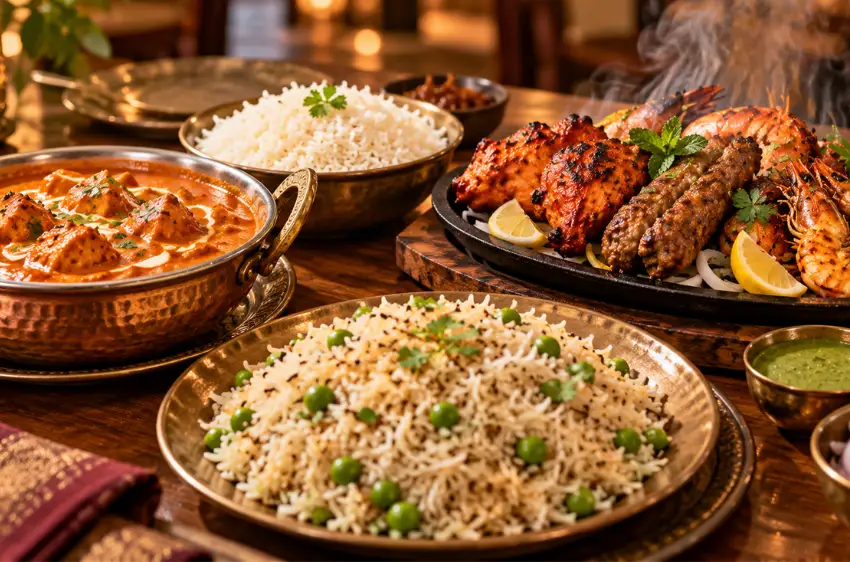
A plate of curry with no rice is half a conversation. Indian rice dishes run from a bowl of plain steamed grain to a one-pot biryani that needs nothing beside it, and the style you pick changes how a sauce, a spice, or a smoky grill tastes. This guide sorts the main styles by the job they do on the plate, then matches them to curries, tandoor grills, and fish.
Table of Contents
Plain, Pulao, and Biryani: Three Jobs for Rice
Plain steamed rice is a blank page. It adds no flavor of its own, which is exactly why it suits a loud gravy.
Pulao sits one step up. It is lightly seasoned, often with cumin and jeera and peas pulao is usually described as fragrant, light, and comforting. Think of it as a side with manners.
Biryani is a different animal. The meat, fish, or vegetables are cooked together with the rice, so the grain carries the seasoning. Mutton biryani leans on slow-cooked, tender pieces, while fish biryani starts with fillets marinated in turmeric, chilli, and lemon. Chicken, chicken tikka, and veg and paneer versions follow the same one-plate logic.
Kashmiri rice is another side style, and seasoning varies from kitchen to kitchen. If a dish name is unfamiliar, a quick question to the server beats a guess.
How Indian Rice Dishes Match Curries
Kerala cooking is known for coconut-rich curries. Mango chicken, in a creamy mango and coconut gravy, plays sweet, tangy, and spicy notes against each other. Plain rice gives that balance room to work.North Indian butter chicken is the classic creamy option, and either plain rice or bread handles it. Hotter South Indian dishes change the plan. Pepper chicken brings black pepper and curry leaves, and Chettinad chicken is bold, fiery, and aromatic. Next to those, a gently seasoned pulao softens the edges.Bread is the other partner. Kerala porotta with chicken curry is a pairing many tables know well, and plenty of people order rice and bread together and share both.
Tandoor Grills Want a Quiet Side
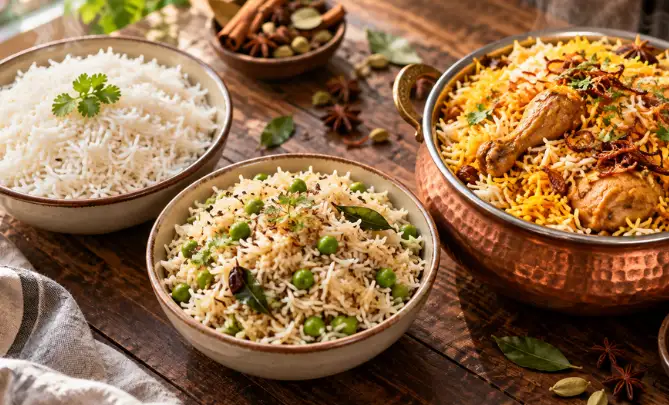
Clay-oven cooking is smoky by nature. A mixed grill of chicken, prawns, lamb cutlets, and seekh kebabs, served with lemon wedges, mint chutney, and onions, already brings char, acid, and herbs to the plate.
So the rice should stay in the background. Jeera and peas pulao do that well. If the grill is only a starter and a heavier second course follows, chicken tikka biryani is a natural bridge, since the tikka style carries over.
Rice With Fish and Seafood
Fish is delicate, and a heavy rice can flatten it. Plain rice or pulao leaves the seasoning on a fish curry intact. Fish biryani works differently. The turmeric, chilli, and lemon marinade is already in the dish, so treat it as a single main and skip the extra side.
Allergies, Diets, and Honest Limits
Ingredients in Indian rice dishes are not always obvious. Nuts, dairy, gluten, fish, and shellfish can turn up in a rice dish or the sauce beside it, and recipes differ between kitchens. Tell whoever is preparing your food about any allergy before ordering, and ask for a direct answer instead of assuming.
Vegetarians have clear choices in veg and paneer biryani and jeera and peas pulao. Plain rice suits nearly everyone, though sauces are a separate check.
If you manage a medical condition such as diabetes or celiac disease, this article cannot tell you how a dish fits your plan. A doctor or an accredited dietitian can.
Sharing a Table
For a group, a workable spread is one biryani, one plain or pulao rice, two curries with different sauces, and some bread. A banquet-style table of butter chicken, a Kerala coconut curry, mutton biryani, and assorted breads follows that pattern.
Final Thoughts
Rice shapes how a curry lands. Keep it plain for sauce, light for grills and fish, and choose biryani when the plate has to stand alone. The Curry House in Campbelltown serves rice in all three styles. Which curry would you pair with your usual rice?
FAQ
Honestly, either works. Plain rice soaks up the gravy, and bread is better for scooping. Butter chicken is a North Indian classic, so plenty of tables order both. If you only want one, pick plain rice for the sauce and add bread to share.
Treat it as a main. Biryani carries chicken, mutton, fish, or vegetables along with the rice, so it can stand on its own. Some people add a starter, but it doesn't need a curry beside it. Plain rice and pulao are the sides.
Jeera and peas pulao is a gentle match for veg mains, and the veg and paneer biryani works as a full plate. Plain rice always fits. If you avoid dairy, nuts, or gluten, ask the kitchen first, because paneer dishes and sauces can vary.
Eight in the rice category. That means plain rice, jeera and peas pulao, Kashmiri rice, and five biryanis made with chicken, chicken tikka, mutton, fish, or veg and paneer. Seafood and lamb sit in their own categories, so check those pages as well.
Keep it simple. Plain rice or the pulao lets the seasoning on the fish come through. The fish biryani is another route, since the fillets are marinated with turmeric, chilli, and lemon. Anyone with a fish or shellfish allergy should tell the staff before ordering.

