

Subtotal $0.00
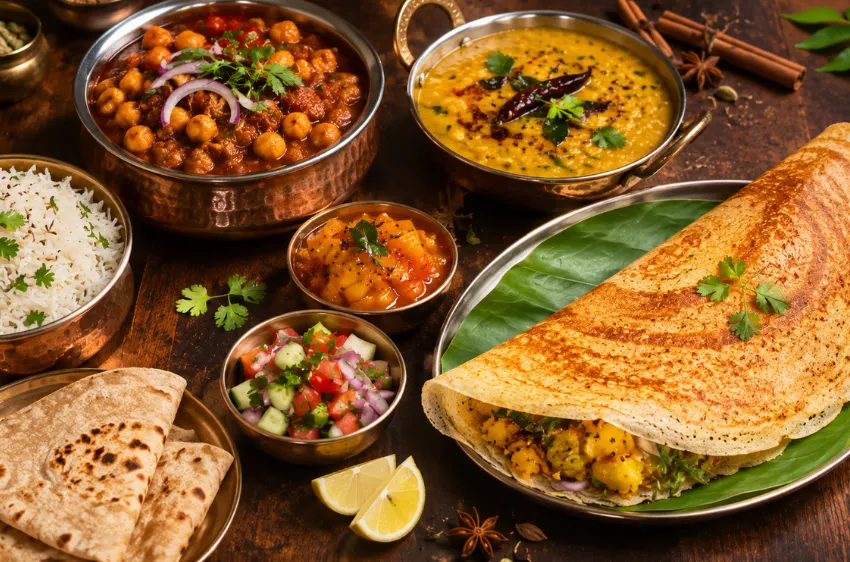
You order the vegetable curry, feel good about it, and later find out it was finished with a spoonful of cream. It happens all the time. Vegan Indian food is easy to find once you know which dishes start from lentils, chickpeas, vegetables and coconut, and which ones lean on ghee, paneer, yoghurt or butter. Below, we use a real Campbelltown, NSW menu that covers Kerala, North Indian and Indo-Chinese cooking to show you both.
Lentil dals, chickpea curries, dry vegetable dishes, dosas, plain rice and roti are often plant-based. Dairy tends to show up in anything called makhani, malai, korma, paneer, dahi or raita, plus most naan and nearly every Indian sweet. Recipes vary, so ask before you order.
Table of Contents
Vegetarian and Vegan Are Not the Same Thing
Indian menus usually split dishes into “veg” and “non veg”. ‘Veg’ means no meat or fish. It says nothing about milk, and sometimes nothing about egg or honey either.
Dairy runs deep in Indian cooking. Ghee (clarified butter) is used to fry spices. Paneer is a fresh cheese. Dahi is yoghurt, used in marinades and toppings. Cream or malai thickens gravies. Milk is also one of the allergens food businesses in Australia must declare. Treat a veg label as your first filter, then keep asking.
Dishes That Usually Start Plant-Based
Lentils and Chickpeas
Chana masala is chickpeas simmered with onion, tomato and spices. Dal Tadka is yellow lentils finished with a tadka, which means whole spices fried in hot fat and poured over the top. That fat is often ghee, so ask for oil. Lentils and chickpeas count as legumes, which the Australian Dietary Guidelines place in both the vegetable group and the protein alternatives group.
Vegetable Curries
Bhindi (okra) Masala and Aloo Gobi or Eggplant Curry are drier dishes built on onion, tomato and spice. Cream is less likely here, but ask about the cooking fat.
South Indian and Kerala Staples
Kerala cooking uses a lot of coconut, which makes a dairy-free curry more likely. Look at Masala Dosa (a fermented rice and lentil crepe filled with spiced potato), Vada (savoury lentil fritters), Appam (rice and coconut pancakes), Kappa (tapioca) and Pazham Pori (banana fritters). Dosas are sometimes cooked with ghee on the griddle, and Kerala Parotta dough can include egg, milk or ghee, so check both.
Snacks and Street Food
Onion Bhajia is sliced onion in chickpea flour batter. Vegetable samosas and pani puri are often dairy-free too, though some kitchens add ghee to the pastry.
Indo-Chinese From the Wok
Chilly Gobi, Gobi Manchurian, Veg Fried Rice and Veg Chowmein rely on soy, garlic and chilli. The one to watch is the egg. The menu describes its chicken fried rice as containing egg, so ask whether the veg version does too.
Sides
Roti, Plain Rice, Jeera and Peas Pulao, Tomato, Onion and Cucumber Salad, Mango Chutney and Fries are the usual safe bets. Pulao is sometimes fried in ghee.
Where Dairy Hides on an Indian Menu
| Clue | What It Usually Means | Examples From the Menu |
|---|---|---|
| Makhani | Butter and cream | Dal Makhani, Paneer Makhani |
| Malai | Cream | Malai Kofta |
| Korma | Cream, yoghurt or nut paste | Mix Veg Korma |
| Paneer | Fresh cheese | Palak Paneer, Paneer Tikka Sizzler, Paneer Dosa |
| Ghee | Clarified butter | Ghee Roast Dosa |
| Dahi or Raita | Yoghurt | Dahi Puri, Cucumber Raita |
| Tandoori or Tikka | Often a yoghurt marinade | Tandoori Veg Momos, Achari Soya Chap Tikka |
| Naan or Kulcha | Milk or yoghurt dough, butter on top | Plain Naan, Garlic Naan, Aaloo Kulcha |
| Honey | Not dairy, still not vegan | Sweet and Spicy Crispy Potatoes |
A few more catch people out. Papdi Chaat, Aloo Tikki Chaat and Samosa Chaat usually come with a yoghurt drizzle. Chole Bhature pairs a chickpea curry with fried bread that is often made with yoghurt. Methi mushroom matar dishes are commonly finished with cream. Mint sauce in many Indian restaurants is yoghurt based. The menu itself says its Garlic Naan is brushed with butter and that the crispy potatoes are tossed with honey.
Desserts are the hardest part. Kulfi, Gulab Jamun, Rasmalai and Kesar Phirni are milk based. Payasam is often made with milk, though some Kerala versions use coconut milk.
How to Order Vegan Indian Food Without the Guesswork
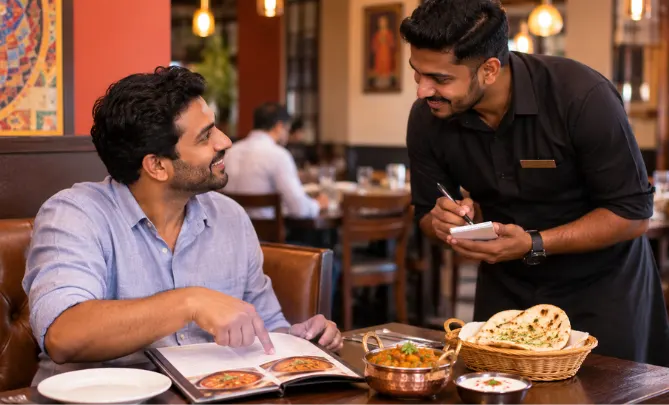
- Say "no dairy, no ghee, no egg, no honey" instead of just "vegan". Some people hear about vegetarianism.
- Ask what fat goes into the tadka and onto the dosa griddle. Oil is often an easy swap.
- Ask whether the bread dough contains milk, yoghurt or egg. Roti is usually the simplest choice.
- Ask for chaat without yoghurt.
- Check whether a curry base uses cream or cashews.
A note if you have a milk allergy: Preference and allergy are different conversations. Shared kitchens use the same tandoor, fryers and pans, so even a dairy-free recipe can pick up traces. Tell staff it’s an allergy, and follow the advice of your doctor or allergist.
Final Thoughts
Finding vegan Indian food on any menu comes down to reading a few clue words and asking two or three short questions. Lentils, chickpeas and coconut give you plenty to work with. The menu used as the example here comes from The Curry House in Campbelltown, NSW.
So next time you sit down to order, which dish will you ask about first?
FAQ
Usually not. Most naan dough uses milk or yoghurt, and plenty get brushed with butter. Roti is the easier pick, but still ask.
The lentils are. The trouble is the tadka on top, which is often fried in ghee, and dal makhani has butter and cream by design. Ask for dal tadka made with oil.
A lot of them are, especially Kerala style. Some kitchens still add a splash of cream or a spoon of ghee, so check.
Maybe, but be careful. Tandoors, fryers and pans are shared, so traces can happen. Tell staff it's an allergy, and go by what your allergist says.
Chana masala, or dal with roti and plain rice, with oil instead of ghee. Simple, filling, and hard to get wrong once you've asked.
