

Subtotal $0.00
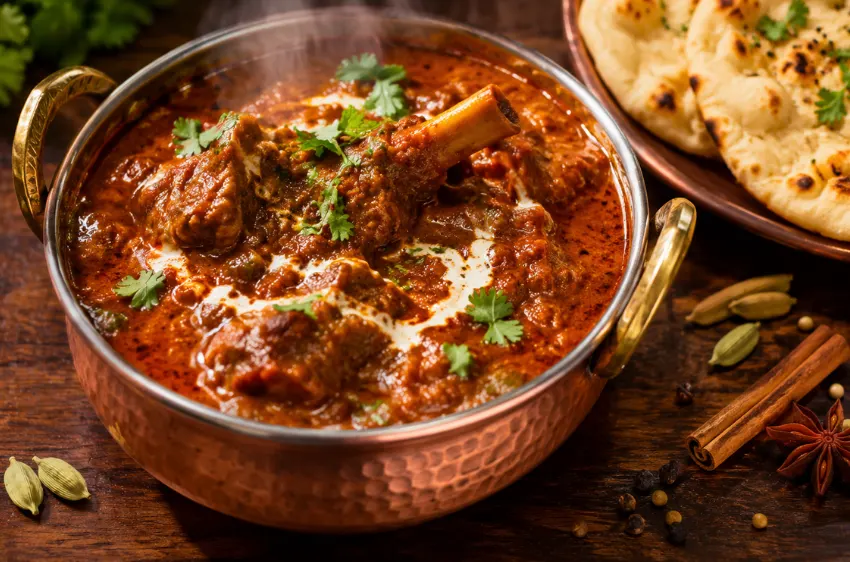
Order lamb at an Indian table, and two dishes can arrive in the same shade of red-orange yet taste nothing alike. Indian lamb curry is not one recipe. It is a group of dishes shaped by region, by the cut of meat, and by how long the pot stays on the heat. This guide sorts out the cuts, the main styles, and a few questions worth asking before you order or cook.
Table of Contents
What Counts as Authentic Lamb Curry
Nobody holds the rulebook on authentic lamb curry. Regions cook it differently, so the phrase points to a method more than a fixed recipe. Kerala kitchens lean on coconut. North Indian cooking often brings smoky char from the tandoor, and lamb that could go into a curry also turns up as cutlets in a clay-oven mixed grill.
What holds across most regions is the order of work. Whole or ground spices go into hot fat first, then onion, ginger, and garlic, and the meat simmers until the sauce clings to it. Time does more than a long ingredient list ever will.
Lamb Cuts and Why They Cook Differently
Texture gets decided at the butcher’s counter. The shoulder, neck, and shank come from hard-working parts of the animal and carry plenty of connective tissue. Slow, moist cooking melts that tissue into a soft, glossy sauce, which is why these cuts suit slow-cooked lamb.
My legs are leaner. It cooks faster and can turn stringy if left to simmer for hours. Bone-in pieces give the gravy body but take more effort to eat, while boneless cubes are easier to serve and need a gentler hand. Rib cutlets prefer fast, high heat, which explains why they land on grills instead of in sauces.
Piece size counts as well. Cubes cut too small shrink and toughen. Pieces about the size of a walnut hold their shape through a long simmer.
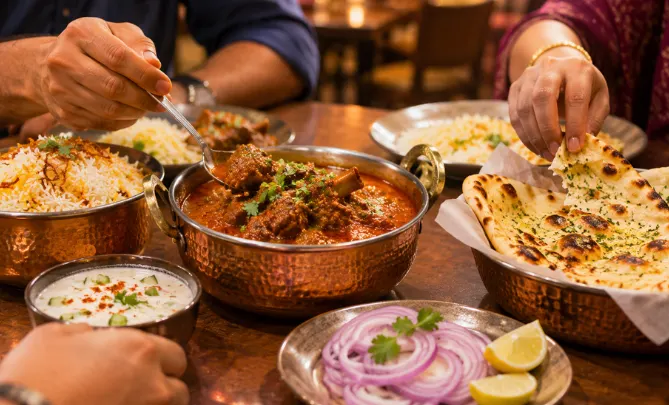
Indian Lamb Curry Styles Compared
Menus use a handful of names again and again. Here is what each usually means, though recipes vary by kitchen.
Lamb Rogan Josh
Kashmiri, in origin, with a red color that comes from chili and a warm, gently spiced base. Heat is usually medium, and the sauce sits between thin and thick.
Lamb Korma
Mild and creamy, built on yogurt, cream or ground nuts, depending on the cook. Nuts and dairy make it a dish to check for allergens.
Lamb Vindaloo
Goan in origin, with vinegar and chilli doing most of the work. Tangy and hot, and a poor match for anyone sensitive to chilli.
Lamb Madras
Usually a hotter red curry led by tomato, with a South Indian leaning. Heat swings widely between kitchens.
Lamb Kadhai
Named after the round, deep pan it cooks in. Expect tomato, capsicum, and coarsely ground spices in a thicker, clingier sauce.
Lamb, Mutton, and Goat on a Menu
Lamb comes from a young sheep, so the meat is milder and softer. Mutton comes from an older animal, with a stronger flavor and firmer meat that needs longer cooking.
There is a catch. In India, the word “mutton” on a menu often means goat, not sheep. A mutton curry, or a mutton biryani made with slow-cooked, tender pieces, may therefore use either meat depending on the kitchen. Asking what animal is in the pot is a fair question, and it matters for anyone avoiding a particular meat for religious, ethical or dietary reasons.
Heat, Allergens, and Safe Handling
Chilli level is the most common surprise. Vindaloo and madras can run hot; korma usually sits mild, but every kitchen sets its own scale, so asking beats guessing.
Allergens deserve a direct question. Nuts, dairy, and sesame turn up in many sauces, and a dish name will not tell you what went in. Anyone with a diagnosed allergy should confirm with the kitchen and speak to a doctor or dietitian about their own needs.
A Simple Way to Choose
Start with heat tolerance, then think about texture. Mild and creamy points to korma, with rogan josh a step up in spice. Fans of tang and chilli lean toward vindaloo or madras. Kadhai suits anyone who wants a thicker sauce with a tomato and capsicum edge.
Cooking at home, matching the cut to the clock. Shoulder suits a long simmer, leg a shorter one, and a good Indian lamb curry usually comes down to that pairing and a patient hand. Rice or bread carries the sauce.
Final Thoughts
Lamb curry rewards a little curiosity. Learn the cut, learn the style, and ask what is actually in the pot. The lamb list at The Curry House, running from rogan josh and korma to vindaloo, madras, kadhai and mutton curry, shows how wide the category is. Which style would you try first, the mild and creamy korma or the sharp, tangy vindaloo?
FAQ
The shoulder is a safe pick. It has enough connective tissue to turn soft over a long simmer, and the fat keeps the sauce glossy. Legs work too if you cook them for less time and keep an eye on the pot.
Not quite. Lamb comes from a young sheep and tastes milder, while mutton is older meat with a stronger flavor. On Indian menus, though, mutton can also mean goat, so ask the kitchen which one is in the dish.
Korma is usually the gentlest, with a creamy sauce and low heat. Rogan josh often sits in the middle. Every kitchen sets its own heat, so confirm before ordering, especially for kids or anyone sensitive to chilli.
Sometimes. Korma often does, and a few other sauces use ground nuts as a thickener. A dish name will not settle it, so ask the kitchen directly. Anyone with a diagnosed allergy should also check with their doctor.

