

Subtotal $0.00
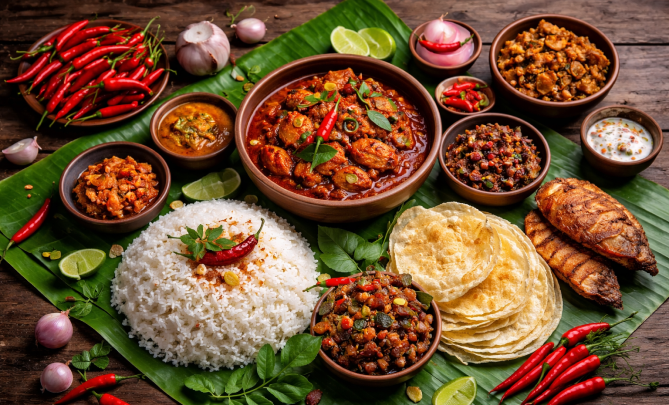
If you’ve ever sat down for a traditional feast from the South, you’ve probably wondered: is Kerala food going to set my mouth on fire? There is a common myth that all South Indian dishes are aggressive with heat. The reality? It’s a bit more balanced than that. While Kerala cuisine is bold, it relies on layers of flavor rather than just raw chilli power.
Table of Contents
What Makes the Heat in Kerala Food Unique?
Kerala food is famous for its use of black pepper and small, potent bird’s-eye chillies. Unlike the heavily dried red chilli powders used in North Indian curries, the spice here often feels fresher. It hits you quickly but doesn’t linger in a heavy, oily way. Many dishes use coconut milk to mellow out the sharp edges of the bird’s-eye chilli, creating a creamy finish that balances the initial kick.
How Does It Compare to North Indian Dishes?
North Indian food often uses a heavy base of garam masala and cream. It’s a slow, warming heat. Kerala food, by contrast, is light and aromatic. You’ll find that the “heat” often comes from a blend of ginger, garlic, and freshly cracked pepper. If you are comparing a classic butter chicken to a Malabar fish curry, the fish curry will likely feel more vibrant and “zingy” on the tongue, but it isn’t necessarily “hotter” in terms of pain.
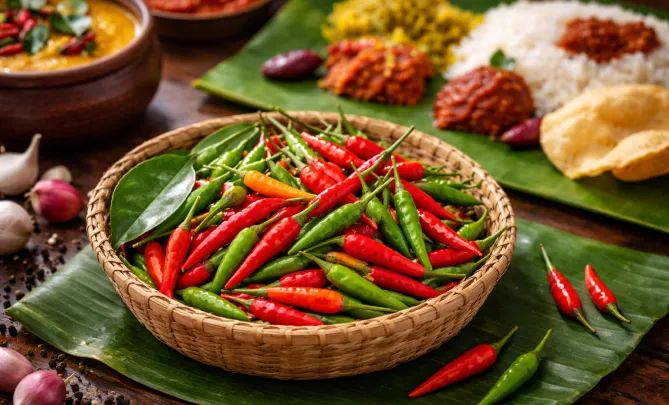
The Secret Role of the Bird’s-Eye Chilli
In most regional kitchens, the bird’s-eye chilli is the star. It provides a clean, sharp heat that cuts through the richness of coconut. However, the heat levels vary wildly depending on the dish. A vegetable stew (Ishtu) is incredibly mild and comforting, while a traditional beef fry might be packed with enough pepper to make you sit up straight.
Why Coconut Is the Ultimate Heat Buffer
The abundant use of coconut grated, roasted, or as milk, is what saves your palate. It adds a natural sweetness that absorbs the spice. This is why Kerala food is often described as “rich” rather than just “spicy.” It’s about the harmony between the bird’s eye chilli and the soothing coconut oil. It’s a balanced profile that highlights the ingredients rather than masking them behind a wall of fire.
Final Thoughts
So, is it the spiciest? Not always. But it is certainly the most flavorful. Kerala dishes offer a complex heat that rewards curious eaters. If you’re looking for a meal that wakes up your senses without ruining your night, this is the cuisine for you. Are you ready to test your spice tolerance with a real Malabar curry?
FAQ
Not at all. Plenty of dishes, like Appam with vegetable stew or certain coconut-based kormas, are very mild. Just ask your server to point out the "non-pepper" options.
Kerala is the land of spices! Pepper was our original currency. It adds a woody, deep heat that feels very different from the "burn" of red chillies. It’s better for digestion, too.
Usually, it’s the dry fry dishes or the traditional red fish curry. If you see "Malabar" and "Pepper" in the same sentence, grab an extra side of raita just in case.
You can, but keep in mind that some spice is built into the base of the curry. We can usually tone down the fresh chillies, but the aromatic spices are what give the food its soul.

